


Metal 3D Printing
Freeform || Coatings || MRO || Toolings || Metal NPD


Polymer Printing
Batch Production || Composites || Soft Toolings


Designing & RE
Reverse Engineering || 3D Scanning || 3D Modelling


FFFT
Form Fit & Functional Trials
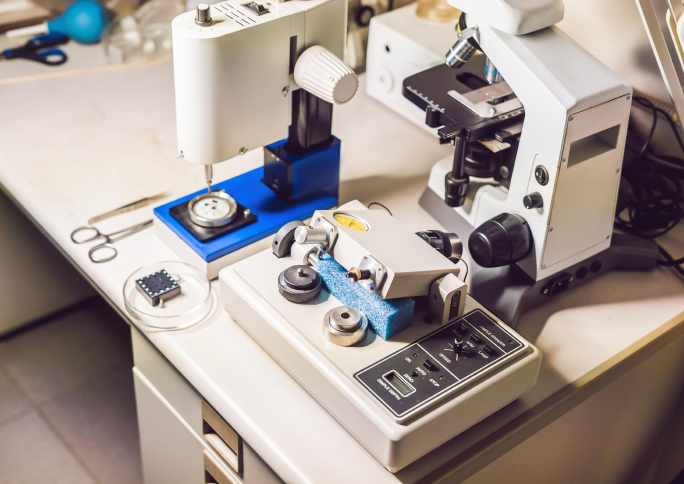

Metallography
Metal 3D Printing
Freeform || Coatings || MRO || Toolings || Metal NPD
Freeform
DED process is commonly used to deposit “freeforms” of near-net-shape metal components, which are dense with mechanical properties comparable to wrought materials. Freeforms may be thin wall or thick masses of material .

MRO
MRO stands for Maintenance, Repair and Operations — or sometimes Maintenance, Repair and Overhaul — and refers to the equipment, tools and activities associated with the daily operations of a business. It doesn’t include materials, products and services that are directly used in production, but rather the glue that holds everything together.

Coatings/cladding
Cladding is the bonding together of dissimilar metals. It is different from fusion welding or gluing as a method to fasten the metals together. Building on this, laser cladding has evolved into a potent three-dimensional (3D) additive manufacturing technology by stacking the deposited material layers. Currently, a wide variety of materials can be processed. The ability to functionalize surfaces as well as 3D-printed objects leads to further integration of structural, optomechanical and thermal properties into these parts. One approach is the combination and encapsulation of optical elements like quartz lenses or laser crystals with custom alloys, thus creating multi-material components

Polymer Printing
Composite Printing
Composite 3D printing is a relatively new trend in additive manufacturing: it is an innovative technology that allows to 3d print parts with enhanced parameters of strength, stiffness, and durability due to fiber component added to plastics.Here is how fiber can be combined with plastics: filling with chopped fiber or reinforcing with continuous strands. In this material we focus on continuous fiber reinforcement specifically, as chopped fiber does not contribute to the properties equally and does not add to strength as much.
Batch Production
If you’re looking to create functional prototypes and relatively small production runs of end-use parts, then MJF should be your go-to solution. MJF is excellent for building much stronger parts than what SLS can produce. As well, MJF is really good at producing mechanical properties in every direction of your part’s geometry. So if you’re making parts with complex, multifaceted designs that also come with smaller features that need to be sturdy, then MJF is the most viable option.

Reverse Engineering
Composite Printing
Reverse engineering provides manufacturers with information about the design of a product or component. When done successfully, reverse engineering gives you a virtual copy of the blueprint that went into the original design. Reverse engineering is perhaps the most accurate way to recreate the designs for items that went out of production decades beforehand. In cases where the original blueprints are long since lost or destroyed, reverse engineering is perhaps the only way to bring such products back to life. If you can obtain a working model of an old product, you can typically trace the steps of its design and use those insights to construct a new model, repair a part or improve future products.Reverse engineering provides manufacturers with information about the design of a product or component. When done successfully, reverse engineering gives you a virtual copy of the blueprint that went into the original design. Reverse engineering is perhaps the most accurate way to recreate the designs for items that went out of production decades beforehand. In cases where the original blueprints are long since lost or destroyed, reverse engineering is perhaps the only way to bring such products back to life. If you can obtain a working model of an old product, you can typically trace the steps of its design and use those insights to construct a new model, repair a part or improve future products.
FFFT
The phrase form-fit-function (FFF) is used in manufacturing to describe the identifying characteristics of a part (a single component that goes into the final build of your product, typically kept on an item master). Form-fit-function can be defined as:Form – the shape, size, dimensions, mass, weight and other visual parameters that uniquely distinguish a part. For example, you might describe a screw that will be used in your product as ‘SCREW, PAN HEAD, M3 x 0.5, 2mm Lg, 316 SS.’Fit – the ability of a part to physically interface with, connect to, or become an integral part of another part. For example, if we want our screw to fit to correctly in the final product, it must adhere to the rules set by engineering in the design phase. This might include specifications for the space around the screw relative to a faceplate hole or the location of the screw’s top position relative to the product surface.Function – the action or actions that a part is designed to perform. In our example, the screw is intended to hold other parts of the product together.
Metallography
Metallography is the study of the microstructure of all types of metallic alloys. It can be more precisely defined as the scientific discipline of observing and determining the chemical and atomic structure and spatial distribution of the grains, constituents, inclusions or phases in metallic alloys. By extension, these same principles can be applied to the characterization of any material.Different techniques are used to reveal the microstructural features of metals. Most investigations are carried out with incident light microscopy in brightfield mode, but other less common contrasting techniques, like darkfield or differential interference contrast (DIC), and the use of color (tint) etching are expanding the scope of light microscopy for metallographic applicationsMany important macroscopic properties of metallic materials are highly sensitive to the microstructure. Critical mechanical properties, like tensile strength or elongation, as well as other thermal or electrical properties, are directly related to the microstructure. The understanding of the relationship between the microstructure and macroscopic properties plays a key role in the development and manufacture of materials and is the ultimate aim of metallography.
Our Capabilities

Direct Energy Deposition DED

Laser Powder Bed Fusion LPBF

Markforged Composite Printer

Fused Deposition Modelling

HP Multi Jet Fusion MJF

Stratasys PolyJet ,SLA, DLP

Fused Deposition Modelling
Our Materials
-
Metals: Fe Based Alloy ,Ni Based Alloy, Cu Based Alloy,Titanium alloys, Special Graded Materials,FGM -
Composites: Onyx, Carbonfiber, HSHT, Kevlar, ESD, FR,FIberglass Nylon White, -
Polymers: PA-12,PLA,ABS,TPU,HIPS, ABSCF, NylonCF
-
Ceramics: Alumina(Al2O3) ,White/Black Zirconia -
Multi-Colors Realistic View Parts, True Clear -
Materials Successfully Processed At RRCAT
SS316, In 625,In 718, Colmonoy, Stellite-6,Ti6Al4V, Hastealloy,WC,Triballoy, NiCuCr, Graphite


